

Poly Garment Bag Sizing: A Buyer's Guide to Lengths, Gauge & Roll Counts
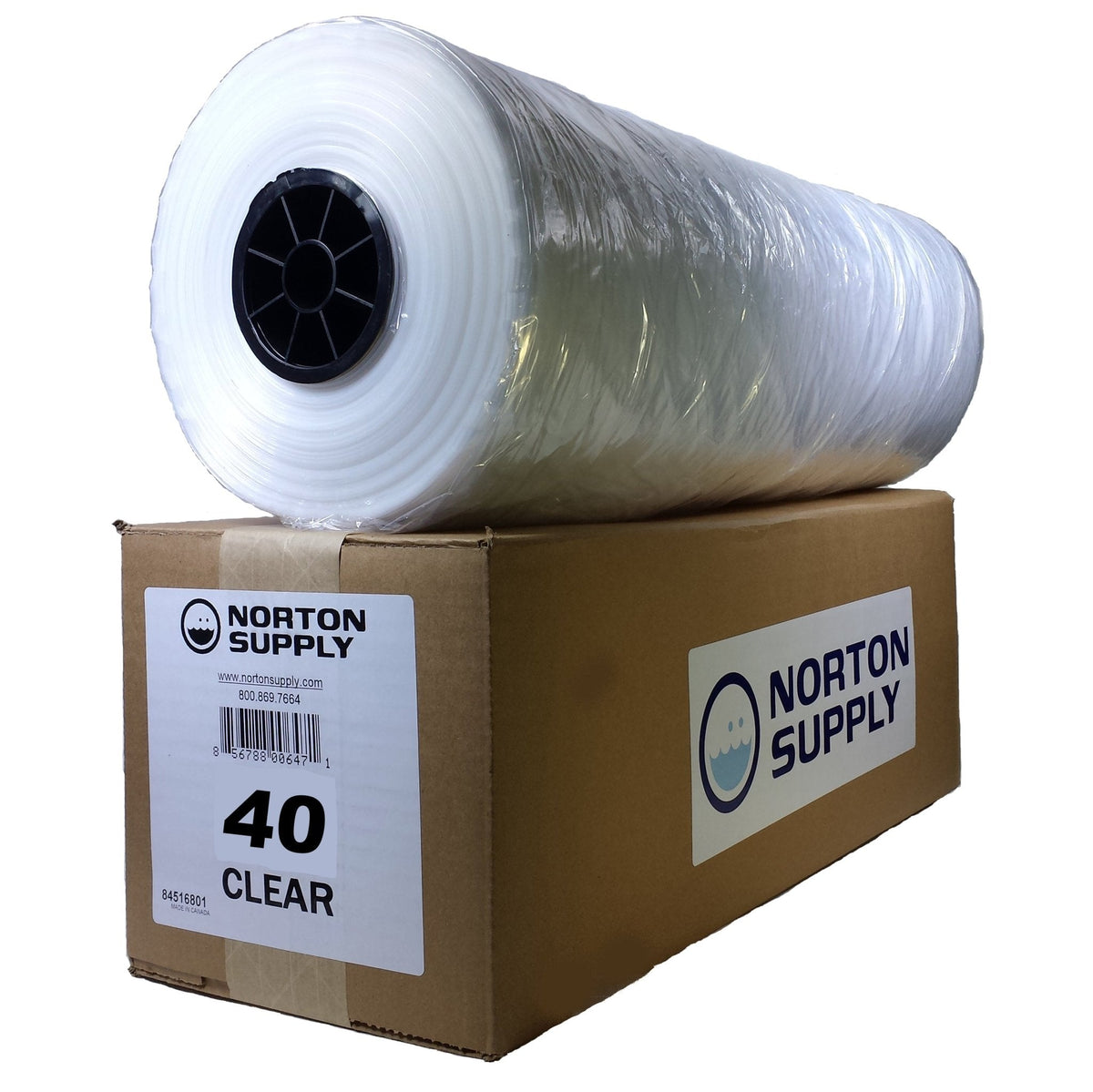
A poly garment bag has one job: get a pressed garment from your rail to your customer's closet without dust, rain, or wrinkles. Pick a bag that's too short and the hem hangs out the bottom. Pick one that's too long and you're paying for plastic that ends up in the trash. Get the length right, stock the right mix, and a roll of poly is one of the cheapest ways to protect the work you just did. Here's how to size, choose, and stock poly garment bags for a dry cleaning or laundry counter.
How poly bag length is measured
Garment bag length is measured from the top of the hanger hole down to the open bottom of the bag. That means the number on the roll is the usable length from the hanger hook down. To size a bag, hang the garment on the hanger you'll send it out on, then measure from the top of the hanger to the lowest point of the hem. Choose the next bag length up so the garment is fully covered with a little room at the bottom.
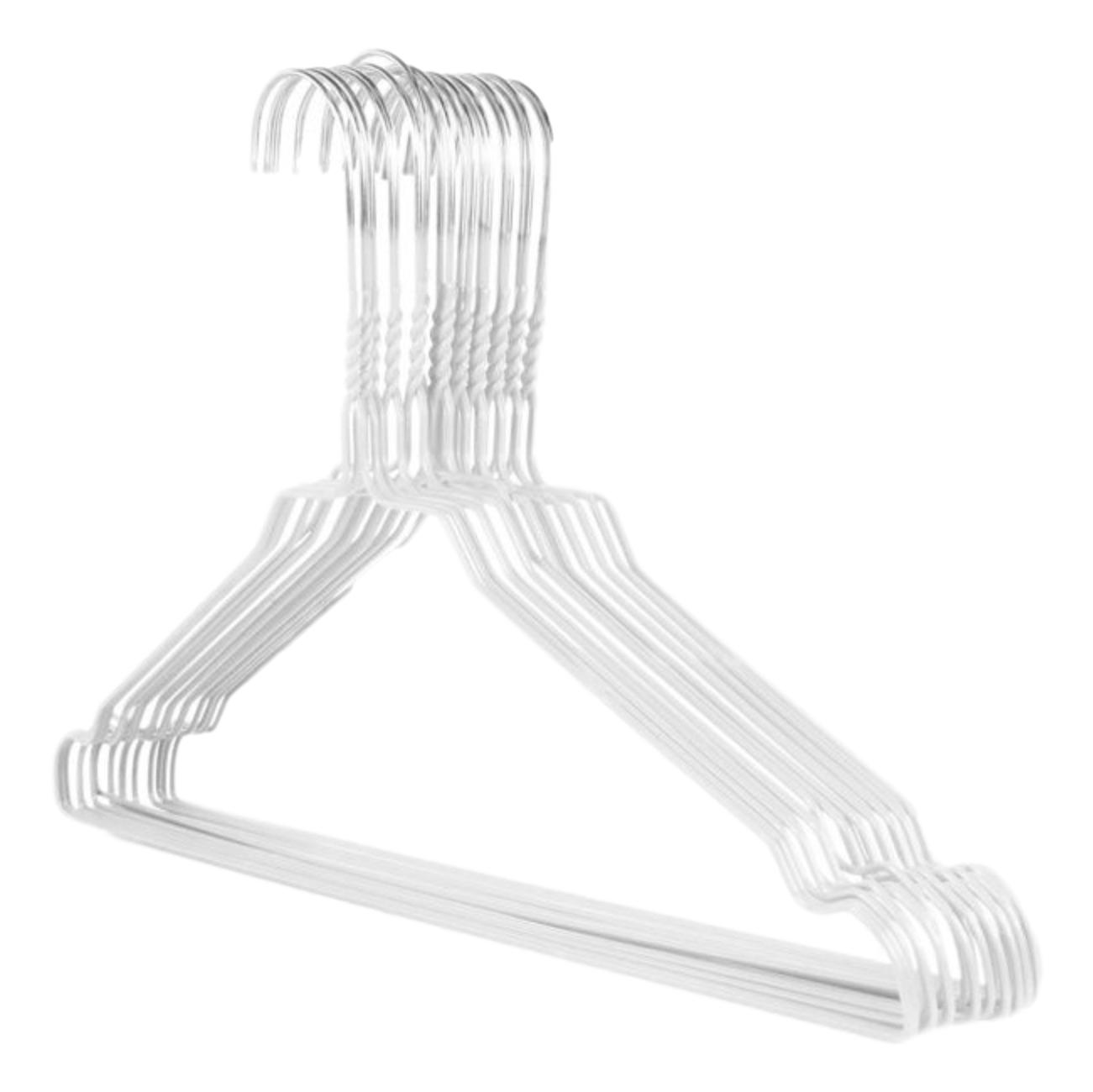
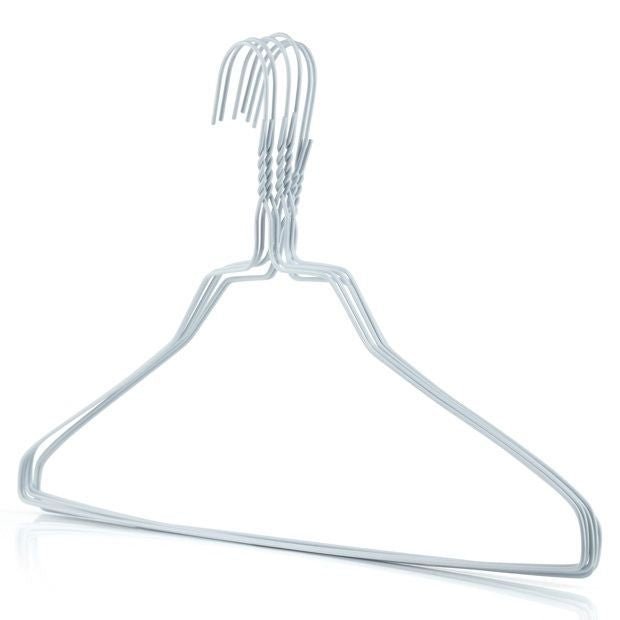
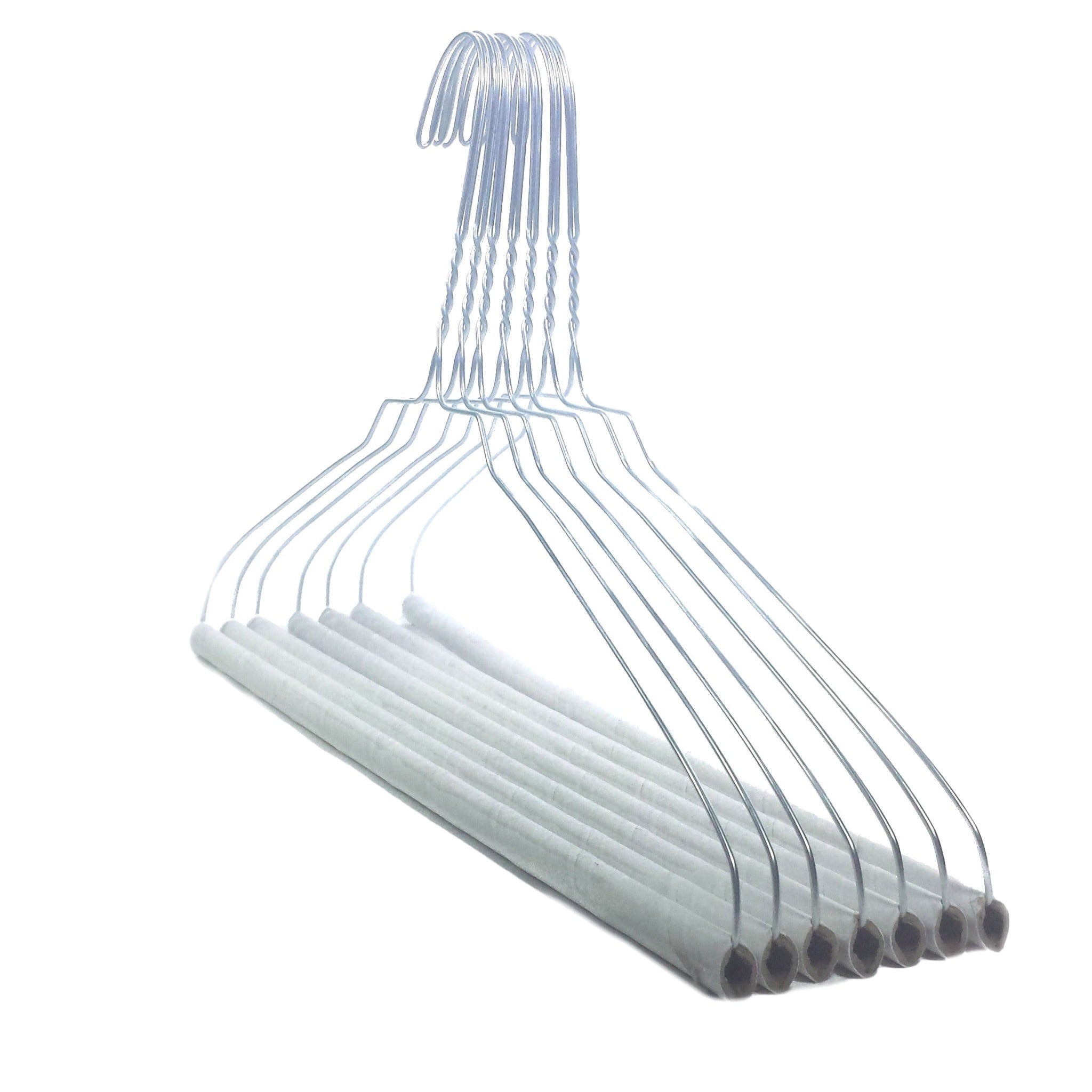
Width matters too. Norton Supply's poly garment bags are 21" wide with a 7" gusset, which gives a full-width cover over standard 16" and 18" wire hangers and room for the shoulders of a suit coat. See our wire hanger buyer's guide to match the hanger to the garment first.
Quick reference: which bag length for which garment
| Bag length | Typical garments | Approx. bags per 21-lb roll |
|---|---|---|
| 30" | Pants on hangers, children's clothing | 469 |
| 38" | Suit jackets, sport coats, skirts | 375 |
| 40" | Shirts and blouses, two-piece suits, short dresses | 359 |
| 56" | Dresses, raincoats, knee-length overcoats | 255 |
| 60" | Long dresses, full-length coats | 236 |
| 72" | Gowns, wedding dresses, full-length formalwear | 210 |
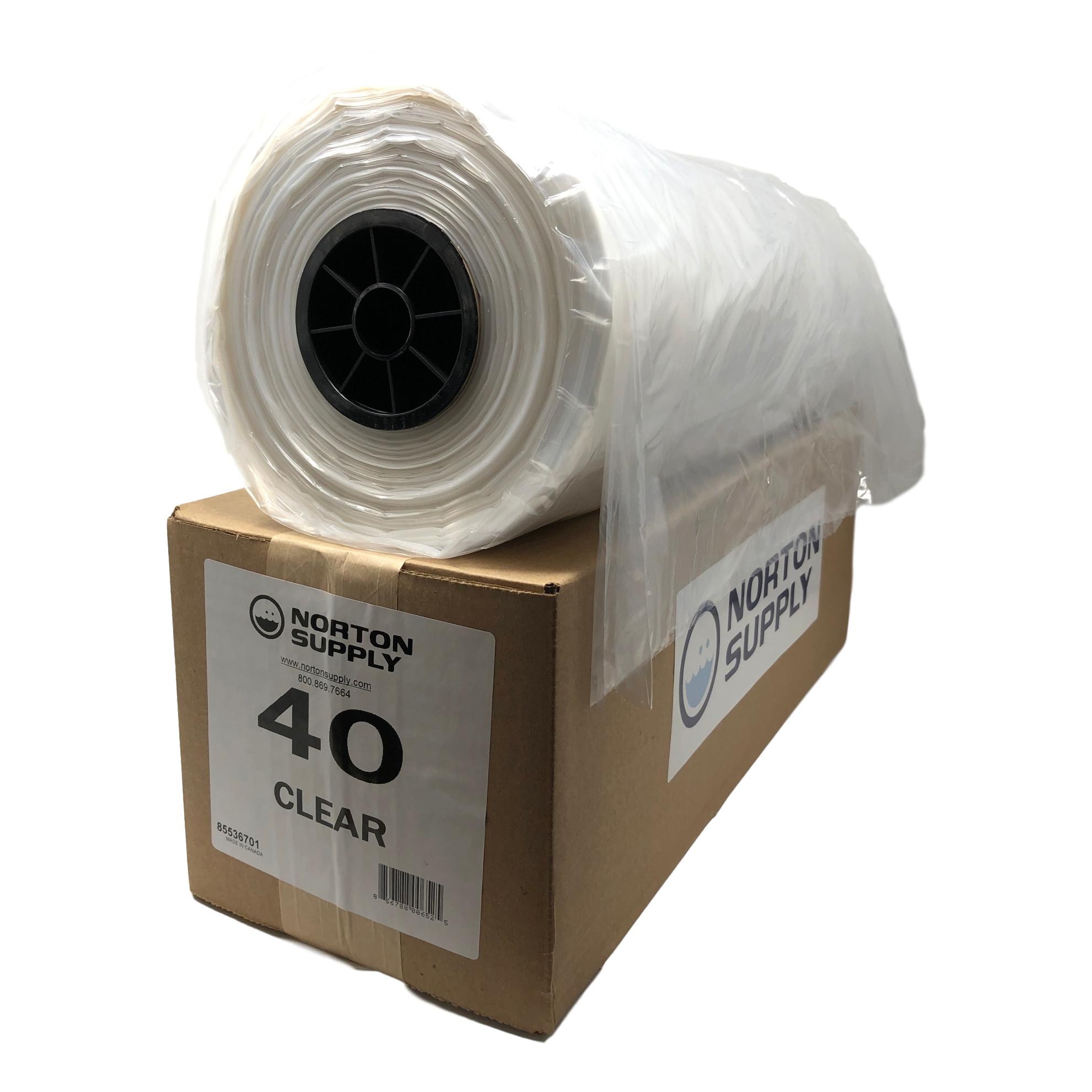
Every length is the same 21-lb roll of 100-gauge clear poly, so shorter bags simply give you more bags per roll. That's why matching length to the garment matters: bagging pants in 40" poly instead of 30" means roughly 110 fewer bags out of every roll.
Gauge: why 100 gauge
Poly film thickness is measured in gauge, where 100 gauge equals 1 mil (one thousandth of an inch). Thinner film is cheaper per roll, but it tears on hanger hooks, splits at the shoulders on heavy coats, and punctures on the rack or in a delivery van. A torn bag in the customer's hands undoes the finish you just paid a presser to put on the garment.
Norton Supply stocks garment bags in 100 gauge only. It's heavy enough to survive the rail, the counter, the car, and the closet, while still dispensing cleanly off the roll at the finishing station.
Features that speed up bagging
- Sloped shoulders follow the shape of the hanger, so the bag drapes cleanly instead of bunching at the top.
- Pre-cut hanger holes let the hook pass straight through without the operator tearing the film.
- Crystal-clear LDPE lets your customer see the pressed garment and your ticket without opening the bag.
How to stock the right mix
Most counters don't need all six lengths on the rail at once. A practical setup is:
- One everyday length for the bulk of your work, usually 40", which covers laundered shirts and suits.
- 30" for pants on hangers, so you aren't wrapping trousers in shirt-length poly.
- One long length (56" or 60") for dresses and coats.
- 72" on hand if you clean gowns, wedding dresses, or formalwear. You won't use it daily, but you can't substitute a shorter bag when you need it.
Volume math: how many rolls do you need?
Divide your daily garment count for each length by the bags per roll. For example, a counter bagging 150 shirts and suits a day in 40" poly uses about 150 bags a day. At roughly 359 bags per roll, that's a new roll every two to three days, or about 11 rolls over a 26-day working month. Run the same math for your pants and long-garment volume, add a buffer of one or two rolls per length, and you have a reorder quantity that won't leave you bagging a dress in two short bags on a Saturday.
Beyond garment bags
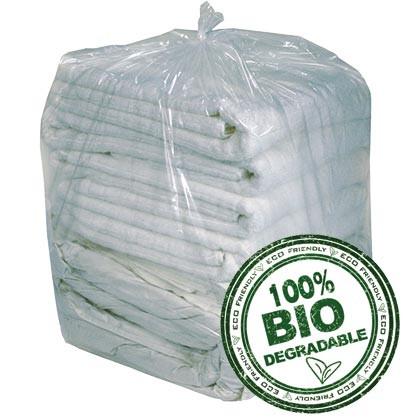
For wash-and-fold, comforters, and bulk linen, a garment bag is the wrong tool. Clear Rhino bags in 20, 30, 40, and 55 gallon sizes handle folded laundry and bulky bedding, and cart covers and liners protect full carts in transport. Browse the full range in our poly garment bags and plastic covering collection.
Common bagging mistakes that cost money
- One length for everything. Bagging pants in shirt-length poly, or shirts in dress-length poly, burns through rolls fast. Keep 30" at the pants station, 40" for shirts and suits, and a long length at the dress and coat rail.
- Doubling up short bags. Covering a long coat with two short bags looks unprofessional and uses more plastic than one bag of the right length. Keep at least one long size in stock.
- Bagging warm or damp garments. Let garments cool and dry fully after pressing before they go into poly. Trapped heat and moisture can leave creases and odors the customer will notice.
- Letting the hem touch the floor. If the garment's hem sits at the bottom edge of the bag, it will pick up dirt on the rail and in the car. Size up one length.
- Running out on a busy day. Poly is a daily consumable. Track rolls used per week by length and reorder before you open your last roll, not after.
Frequently asked questions
What size poly garment bag do I need for a suit?
A 38" or 40" bag covers a suit jacket or a two-piece suit on a hanger. Measure from the top of the hanger to the hem and choose the next length up.
What size bag for a wedding dress or gown?
Use a 72" bag for gowns, wedding dresses, and full-length formalwear. For long dresses and full-length coats, 60" usually covers the hem.
What does 100 gauge mean?
Gauge measures film thickness: 100 gauge equals 1 mil, or one thousandth of an inch. It's heavy enough to resist tearing on hanger hooks and on the rack.
How many bags are on a roll?
Each 21-lb roll holds approximately 469 bags at 30", 375 at 38", 359 at 40", 255 at 56", 236 at 60", and 210 at 72".
Shipping and handling, stated plainly
Poly rolls are heavy, and freight is where supply costs creep up. Norton Supply absorbs ground shipping on your order, a deliberate choice that keeps your cost per bag predictable. Each order carries a flat $10.95 handling fee that covers warehouse labor, packaging materials, and the carrier costs we absorb.
Shop Norton Supply's poly garment bags: 100-gauge clear rolls in 30", 38", 40", 56", 60", and 72" lengths, ready for your finishing station.
Comments