
Dry Cleaning Spotting Guide: Tannin, Protein & Oil-Based Stains
Spotting is where a dry cleaner earns trust. Get it right and the garment comes back flawless; get it wrong and you set the stain permanently or damage the fabric. The good news: nearly every stain falls into a handful of families, and each has a matching chemistry. Here's the framework professionals use.
The core rule: wet side vs. dry side
Every stain is either water-based or oil-based, and that decides your chemistry. Wet-side stains (tannin and protein) dissolve in water-based spotting agents. Dry-side stains (grease, oil, tar) need solvent-based spotters. Identify which family you're dealing with before you touch it — using the wrong side can drive the stain deeper.
Stains by type — and what removes them
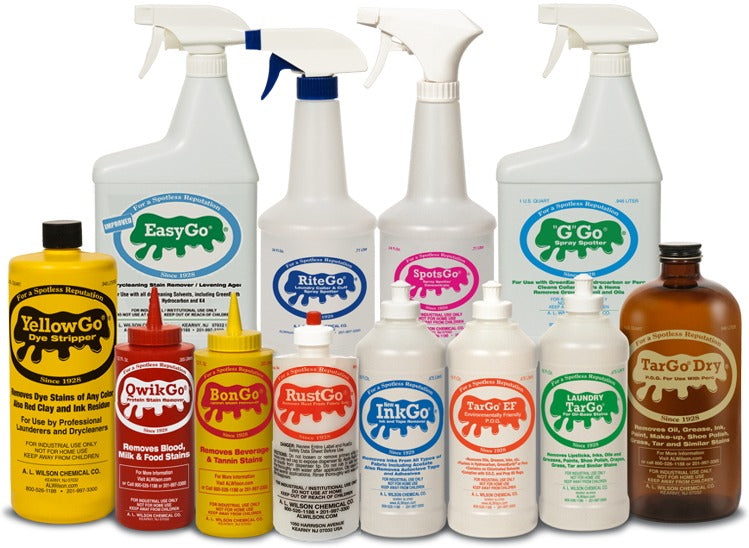
- Tannin (wet-side) — coffee, tea, wine, juice, soft drinks: use a tannin formula like BonGo or StreeTan.
- Protein (wet-side) — blood, egg, dairy, food, perspiration: use a protein formula like QwikGo or StreePro. Never apply heat first — it cooks the protein into the fiber.
- Ink & dye — pen, marker: use InkGo.
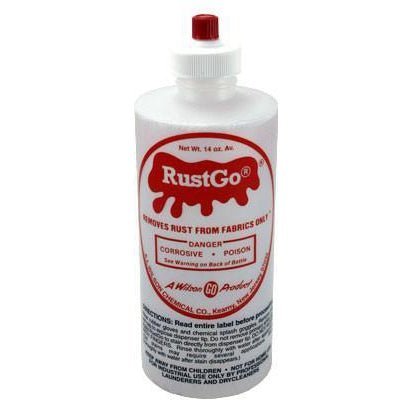
- Rust & metal marks: use RustGo (or Fluoride-Free RustGo).
- Grease, oil & tar (dry-side): use a solvent spotter such as TarGo.
Five rules that protect the garment
- Identify the fiber and test first. Check colorfastness on a hidden seam before you spot.
- Work mild to aggressive. Start with the gentlest effective agent and step up only if needed.
- Treat wet-side stains before heat. Pressing or drying a tannin or protein stain sets it for good.
- Use the right tools. A spotting board, steam gun, and a soft brush or spatula work the agent in without abrading the fabric.
- Flush thoroughly. Rinse the spotting agent completely so it doesn't leave a ring or react in the machine.
Beyond spotting: cleaning & finishing
Once spots are out, the cleaning cycle and finish do the rest. Detergents and chemistry handle the wash; AquaSize for sizing, SofSpot for silk spotting , and Staticol anti-static send the garment out crisp and presentation-ready.
Frequently asked questions
How do I remove a coffee or wine stain?
Those are tannin (wet-side) stains — use a tannin spotter like BonGo, StreeTan and treat before any heat or pressing.
How do I remove blood or food stains?
Those are protein (wet-side) stains — use a protein spotter like QwikGo, StreePro, and keep heat away until the stain is fully out.
What's the difference between wet-side and dry-side stains?
Wet-side stains are water-based (tannin, protein) and dry-side stains are oil-based (grease, oil, tar). Each needs a different type of spotter.
Can one spotter handle every stain?
No — matching the agent to the stain family is what protects the garment and prevents setting the stain. A small kit of tannin, protein, ink, rust, and oil spotters covers almost everything.
Always follow each product's label for ventilation, protective equipment, and fabric guidance. Spotting chemicals are professional products meant for trained use.
Stock your spotting board: shop Norton Supply's dry cleaning chemicals and spotting agents — tannin, protein, ink, rust, and oil removers in bottles and bulk gallons.


Comments